Confident Power Pose: The Body Language Hack That Changes Everything
Have you ever wondered how a simple shift in your physical stance could fundamentally alter your mental state and performance? What if standing a little taller, spreading your arms wider, or taking up more space could actually make you feel more powerful, reduce stress, and improve your outcomes in high-stakes situations? This isn't just feel-good advice; it's the premise behind the confident power pose, a concept that bridges neuroscience, psychology, and everyday practicality. While popularized by a landmark TED Talk, the science and application of power posing run much deeper, sparking both enthusiasm and debate. This guide will unpack everything you need to know about using confident body language to reshape your mindset, from the foundational research to actionable techniques you can use today, and address the critical questions surrounding its efficacy. Whether you're preparing for a job interview, a big presentation, or simply seeking a daily confidence boost, understanding power posing offers a fascinating look at the profound connection between our bodies and our brains.
What Exactly Is a Confident Power Pose?
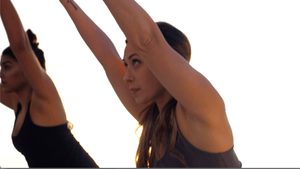
At its core, a confident power pose is a posture that is open, expansive, and takes up space. It’s the opposite of closed, contractive postures like crossing your arms, hunching your shoulders, or tucking your chin in. These high-power poses signal dominance, authority, and assurance not just to others, but crucially, to your own subconscious mind. The theory suggests that by adopting these confident stances, you can trigger a cascade of psychological and physiological changes that make you feel and act more powerful. It’s a form of nonverbal communication that starts with the self. Think of iconic images of leadership: a CEO with feet on the desk, an athlete celebrating with arms raised, or a speaker addressing a crowd with open arms. These are all variations of power poses. The practice involves consciously holding such a posture for a short period, typically 2-3 minutes, to induce a state of what researchers call "embodied cognition"—the idea that our physical experiences can shape our mental states.
The Origins of Power Posing
The modern conversation around power posing was ignited by social psychologist Amy Cuddy’s 2012 TED Talk, "Your Body Language May Shape Who You Are," which has garnered over 60 million views. Cuddy and her colleagues, Dana Carney and Andy Yap, published a seminal 2010 study in Psychological Science that found participants who adopted high-power poses for two minutes showed increased testosterone (the hormone linked to dominance and confidence), decreased cortisol (the stress hormone), and were more likely to take risks in a gambling task. This research provided a biological mechanism for the old adage "fake it till you make it." However, the story didn't end there. The study became a cultural phenomenon, but also faced intense scrutiny and failed replication attempts, leading to a complex scientific debate that we will explore in detail later. The concept itself, though, taps into ancient wisdom: from triumphant warriors to proud peacocks, expansive displays have long signaled strength and status across species.
Key Poses to Try: From Wonder Woman to Victory Stance
You don't need a special room or equipment. Effective confident power poses can be done anywhere you can find a bit of private space—a bathroom stall, an empty conference room, or even your car. Here are the most cited and practical poses:
- The Wonder Woman: Stand tall with your feet hip-width apart, hands on your hips, elbows out, and chin up. This pose exudes readiness and authority.
- The Victory Stance (or CEO Pose): Stand with your feet apart, hands behind your head, elbows out wide. This is the classic "taking up space" pose associated with ownership and control.
- The Looming Lean: Place your hands on a table and lean forward, spreading your weight to appear large and engaged.
- The Feet-Up Executive: While sitting, place your feet up on a desk or table, interlock your hands behind your head. This is the ultimate display of relaxed dominance.
- The Starfish: Lie on your back on the floor (if possible) and stretch your arms and legs out wide, making a large 'X' with your body. This maximizes spatial expansion.
The key is to hold any of these poses for at least two minutes. Shorter durations may not be sufficient to trigger the reported hormonal and psychological shifts. The goal is to feel a sense of expansion and ownership, not to strain or contort yourself uncomfortably.
The Science Behind the Stance: How Body Language Influences Mind and Hormones
The compelling allure of power posing lies in its proposed scientific backing. The central hypothesis is that our body language doesn't just communicate our internal state to the world; it can actively create that internal state. This is the principle of embodied cognition. When you adopt an expansive posture, your brain receives sensory feedback that interprets you as being in a position of power. This, in turn, is believed to influence your neuroendocrine system.
The Harvard Study That Started It All
The 2010 study by Cuddy, Carney, and Yap was elegantly simple. Participants were randomly assigned to either high-power poses (expansive) or low-power poses (contractive) for two minutes. After the posing period, they provided saliva samples and participated in a gambling task. The results were striking: those in the high-power pose condition showed a 20% increase in testosterone and a 25% decrease in cortisol compared to the low-power group. They were also significantly more likely to choose the riskier option in the gambling task (86% vs. 60%). The researchers concluded that power posing could be a simple, free, and rapid method to increase feelings of power and tolerance for risk. This study provided a tangible, biological explanation for why standing confidently might make you feel more confident.
Hormonal Shifts: Testosterone and Cortisol Explained
Testosterone is often mischaracterized as merely the "male aggression hormone," but its role is more nuanced. It's associated with approach motivation, confidence, and the willingness to assert oneself. Higher levels are correlated with dominant behavior in many species, including humans. Cortisol, conversely, is the primary stress hormone. Chronically high cortisol is linked to anxiety, impaired cognitive function, and health problems. The proposed power posing effect—increasing testosterone and decreasing cortisol—creates a hormonal profile that theoretically primes an individual for assertive, confident action while remaining calm under pressure. It’s the biochemical equivalent of feeling ready to "seize the day" without being overwhelmed by anxiety.
The Replication Debate: What Recent Research Says
The scientific process is designed to test and retest findings. Following the 2010 study, numerous labs attempted to replicate the hormonal results. A large, multi-lab, pre-registered replication study published in 2015 in Psychological Science failed to find the same effects on testosterone and cortisol. This cast significant doubt on the original hormonal claims. Subsequent meta-analyses have suggested that while the subjective feelings of power from power posing are fairly robust and replicable, the hormonal changes are much less reliable and may not be the primary mechanism. The current scientific consensus leans toward the idea that power posing works primarily through self-perception theory: by behaving as if you are powerful (adopting the pose), you infer that you must be powerful, leading to increased feelings of confidence and changes in behavior, but not necessarily through a direct hormonal pathway. This doesn't invalidate the practice; it simply refines our understanding of how it likely works—through psychological rather than strong physiological means.
When and How to Use Power Posing for Maximum Impact
Knowing the theory is one thing; applying it effectively is another. The utility of a confident power pose lies in its strategic use as a preparatory tool before situations that demand peak performance and presence. It’s not meant to be used continuously during social interactions (that would likely be perceived as odd or arrogant), but as a private, pre-event ritual.
Ideal Pre-Event Scenarios: Interviews, Speeches, and Exams
The most powerful applications are before high-pressure situations. Imagine you have a critical job interview in 10 minutes. Instead of scrolling through your phone and sitting hunched in the waiting room, you could find a private restroom and hold a Wonder Woman pose for two minutes. The goal is to prime your brain for an approach-oriented state—one of engagement and assertion—rather than a threat-oriented state of withdrawal and anxiety. Similarly, before a major presentation, a sales pitch, a difficult conversation, or an important exam, a brief power posing session can help shift your mindset from "I hope I don't fail" to "I am capable and prepared." It’s a pre-performance routine for your psychology, much like an athlete's warm-up for their body.
The 2-Minute Rule: Duration and Timing for Best Results
The research, and subsequent practical guidance, converges on a minimum of two minutes. This seems to be the threshold needed for the psychological effects to solidify. Rushing through a pose for 20 seconds is unlikely to have a meaningful impact. Timing is also crucial. Power posing should be done immediately before the stressor, ideally within 5-15 minutes. The effects on feelings of power and risk tolerance appear to be temporary, so you want to harness that boosted state as you enter the situation. Think of it as charging your confidence battery right before you need to use it. Don't do it an hour beforehand and expect the effects to last; do it in the moments leading up to your big moment.
Common Mistakes to Avoid
- Doing It in Public: The poses are conspicuous. Doing them in a crowded elevator will draw stares and undermine the goal. Always find a private space.
- Holding for Too Short a Time: Stick to the 2-minute minimum. Set a timer.
- Forcing an Uncomfortable Pose: If a pose causes physical pain, modify it. The goal is a sense of open, comfortable expansion, not strain.
- Relying on It as a Magic Bullet:Power posing is a tool, not a substitute for preparation, skill, or genuine competence. It helps you access the confidence you already possess but may be nervous about expressing.
- Using It During Interactions: Never strike a power pose while in a conversation or meeting. It’s a preparatory state, not a conversational stance. During interactions, aim for open but natural positive body language (uncrossed arms, good eye contact, nodding).
Addressing the Skeptics: Limitations and Criticisms of Power Posing
A balanced discussion must confront the valid criticisms of power posing. The replication crisis has led some to dismiss it as pseudoscience or a placebo effect. Understanding these critiques is essential for using the technique wisely and setting appropriate expectations.
Methodological Concerns in Early Studies
Critics point out several issues in the original and follow-up studies. Sample sizes were sometimes small. The hormonal assays (saliva tests) are notoriously tricky and can be influenced by factors like time of day, diet, and recent exercise. The original study also didn't control for participants' baseline testosterone levels or personality traits, which could confound results. Furthermore, the gambling task used to measure behavior is a narrow proxy for real-world risk-taking and assertiveness. These methodological weaknesses suggest the initial, dramatic hormonal findings may have been overstated or not universally generalizable.
The Placebo Effect and Self-Perception Theory
The most parsimonious explanation for the persistent subjective feelings of power is the placebo effect combined with self-perception theory. If you believe that standing in a certain way will make you feel confident, and you perform that action, you are highly likely to feel more confident as a result of your belief and the physical sensation of expansion. This is not trivial! Placebo effects are powerful and can lead to real improvements in performance and state. Self-perception theory (proposed by Daryl Bem) argues that we infer our internal states by observing our own behavior. So, when we see ourselves (or feel ourselves) adopting a powerful posture, we logically conclude, "I must be feeling powerful right now." This psychological pathway is well-established and doesn't require controversial hormonal shifts to be effective.
Current Consensus in the Scientific Community
The pendulum of scientific opinion has swung from uncritical acceptance to cautious skepticism, and is now settling into a nuanced middle ground. Most researchers agree that:
- Adopting expansive postures reliably increases self-reported feelings of power, confidence, and positive affect.
- The effects on actual behavior (like risk-taking or negotiation outcomes) are smaller, more variable, and context-dependent.
- The robust, replicable hormonal effects (on testosterone and cortisol) are not currently supported by the bulk of the evidence.
- The technique likely works through embodied cognition and self-perception mechanisms, which are psychologically real and valuable.
Therefore, power posing should be viewed as a psychological priming tool—a way to access a more confident mental state—rather than a guaranteed hormonal hack. Its value is in the subjective experience and the subsequent behavioral tendencies it may encourage.
Beyond the Pose: Integrating Power Posing with Other Confidence-Boosting Techniques
Relying solely on a two-minute posture routine is like warming up for a marathon by only stretching your arms. True, lasting confidence is built on a broader foundation. Power posing is most effective when used as one component of a holistic confidence-building strategy. It’s the spark, not the entire fire.
The Power of Positive Self-Talk and Affirmations
What you say to yourself in the moments before and during a challenge is critical. Power posing can create a receptive state, but it needs to be paired with constructive internal dialogue. Instead of "Don't mess up," try "I am prepared and capable." Positive affirmations—present-tense, positive statements about your abilities—can reinforce the confident state initiated by your posture. Combine the physical expansion with a mental narrative of success. For example, while in your victory stance, mentally rehearse a successful outcome in your upcoming meeting. This creates a powerful mind-body synergy.
Visualization and Mental Rehearsal
Elite athletes and performers have long used visualization. Close your eyes and vividly imagine yourself succeeding in the upcoming task. Feel the emotions of confidence and control. Doing this while in a power pose can deeply embed the experience. Your brain struggles to fully distinguish between vividly imagined experience and real experience. By coupling the embodied feeling of power (from the pose) with the imagined success (visualization), you are essentially giving your brain a "practice run" for confidence. This multi-sensory approach is far more potent than either technique alone.
Building Holistic Confidence Through Habit
Ultimately, genuine confidence stems from competence and preparation. Power posing can help you access confidence in the moment, but it cannot replace the deep-seated assurance that comes from knowing your stuff. Use the technique to calm nerves and project assurance, but back it up with thorough research, rehearsal, and skill development. Furthermore, cultivate general habits that support a confident mindset: regular exercise (which naturally boosts testosterone and reduces cortisol), adequate sleep, mindfulness meditation to manage anxiety, and continuous learning. When your foundation is solid, power posing becomes the final polish that helps you present your best self.
Why Everyone Can (and Should) Try Power Posing
Despite the scientific debates, the practical accessibility and low risk of power posing make it a uniquely democratic tool for personal empowerment. There are no expensive courses, special equipment, or exclusive memberships required. The only barrier is knowing the technique and having the willingness to try it.
No Equipment, No Location Constraints
All you need is your body and a few square feet of private space. You can do it in a office restroom, a stairwell, your car, or even your bedroom before leaving for the day. This universality is its greatest strength. Unlike many confidence-building strategies that require resources or social support, power posing is a solo, instant, and free intervention. It’s a tool you can carry with you anywhere, ready to be deployed at a moment's notice.
Quick, Discreet, and Immediately Actionable
The entire process takes less than three minutes. You don't need to change clothes or break a sweat. It’s a discreet, pre-event ritual that fits into any schedule. The immediacy of its effect—feeling a shift in your state within those two minutes—is highly reinforcing. You get quick feedback, which encourages continued use. It’s actionable immediately after reading this article. You can try it right now, wherever you are (find a private spot first!), and experience the subtle but real shift in your posture and, likely, your mood.
Power Posing as a Tool for Empowerment
At its best, the confident power pose is more than a hack; it's a form of somatic self-advocacy. It reminds us that we are not passive recipients of our emotional states. We have the agency to influence our physiology and psychology through simple, deliberate physical actions. For individuals who may feel marginalized, nervous in hierarchical settings, or prone to imposter syndrome, having a private, physical method to tap into a sense of agency can be profoundly empowering. It’s a way to literally "stand in your power" before you have to speak or act. While it won't solve deep-seated confidence issues alone, it serves as a powerful, accessible entry point into taking control of your nonverbal self-presentation and internal experience.
Frequently Asked Questions About Confident Power Posing
Q: Does power posing really work, or is it a myth?
A: It works, but with important caveats. The most reliable effect is an increase in self-reported feelings of power and confidence. The dramatic hormonal changes originally claimed are not consistently replicated. Think of it as a psychological priming tool that can positively influence your mindset and subsequent behavior, not a magic hormonal switch.
Q: How long should I hold a power pose?
A: Research suggests a minimum of two minutes for the effect to take hold. Shorter durations are unlikely to produce significant changes in state.
Q: When is the best time to do a power pose?
A: Immediately before a situation where you need to feel confident and assertive—within 5-15 minutes prior. Do not do it during the event itself.
Q: Can I do a power pose at my desk before a meeting?
A: Only if you can do it in complete privacy. Striking an expansive pose in front of colleagues will be misinterpreted. Use a restroom, empty conference room, or your car.
Q: Are there any risks or downsides?
A: The main risk is overuse or misuse in social contexts, which can make you appear arrogant or strange. It's also not a substitute for preparation. Relying on it alone without building real competence will lead to failure. Physically, ensure poses are comfortable and don't strain muscles.
Q: What if I feel silly doing it?
A: That's common at first. The feeling of silliness is often the resistance of your old, contracted self-image. Push through it for the full two minutes. The physiological and psychological shift often overrides the initial self-consciousness. Do it alone where you won't be interrupted.
Q: Can power posing help with social anxiety?
A: It can be a useful adjunct tool to manage acute anxiety before social engagements. However, it is not a treatment for clinical social anxiety disorder, which requires professional therapy like CBT. It’s best for situational nerves, not deep-seated phobias.
Conclusion: Your Body, Your Mind, Your Power
The journey of the confident power pose from a fascinating lab finding to a global pop-psychology phenomenon and through a rigorous scientific reckoning has taught us as much about science as it has about confidence. The takeaway is not that a specific posture magically floods your system with testosterone. The enduring lesson is that your body language is a powerful feedback loop to your brain. By consciously choosing expansive, open postures, you send a signal of strength and capability inward, which can genuinely alter your subjective experience and behavioral tendencies in the moments that matter most.
In a world that constantly tells us to shrink—to take up less space, to be less assertive—the act of deliberately taking up space is a radical, accessible form of self-assertion. It costs nothing, takes two minutes, and its primary effect—making you feel more powerful—is backed by more consistent evidence than the initial hormonal hype suggested. Use the power pose not as a trick, but as a ritual. A two-minute sanctuary where you physically embody the confidence you wish to project. Pair it with preparation, positive self-talk, and visualization, and you have a potent, immediate toolkit for navigating life's high-pressure moments.
So, the next time you feel doubt creeping in before a big moment, remember: you have a secret weapon. It’s not in your resume or your talking points. It’s in your posture. Find a private corner, plant your feet, open your stance, and for two full minutes, own your space. You might just be surprised at who you meet when you step out of that pose and into the room.