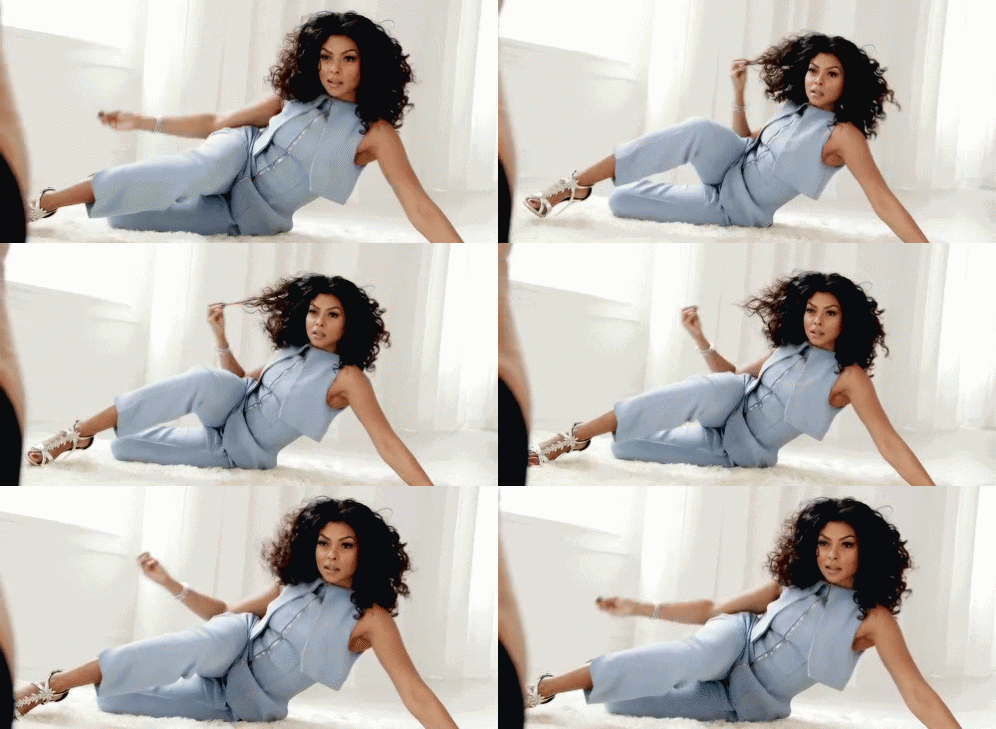
The Ultimate Guide To The Hair Flip Pose: How To Nail That Confident, Effortless Look
Have you ever watched a movie or scrolled through social media and seen someone execute a hair flip pose that seems to instantly elevate their entire presence? That one swift, seemingly effortless motion that sends hair cascading over one shoulder, radiating a vibe of pure confidence and nonchalant cool. It’s more than just a gesture; it’s a power pose disguised as a casual habit. But what exactly makes the hair flip so iconic, and—most importantly—how can you master it to look and feel your absolute best? Whether you’re prepping for a photoshoot, a video call, or just want to channel your inner icon in everyday life, this comprehensive guide will break down everything you need to know about perfecting the art of the hair flip pose.
We’ll dive deep into its surprising history, the psychology behind its confidence-boosting effects, and provide you with a step-by-step technique tailored to different hair types and face shapes. You’ll learn about common mistakes that sabotage the flip, the best products and tools to enhance your results, and how celebrities from Jennifer Lopez to Zendaya have made it their signature move. By the end, you won’t just know how to flip your hair—you’ll understand why it works and how to make it an authentic part of your personal style. Get ready to turn heads and boost your mood, one flip at a time.
What Exactly Is the Hair Flip Pose? More Than Just a Gesture
At its core, the hair flip pose is a deliberate, often dramatic, movement where an individual tosses their head or runs their hands through their hair, causing it to swing dramatically to one side or fall over the shoulder. It’s a non-verbal cue that communicates a range of attitudes: confidence, playfulness, defiance, or sheer glamour. Unlike a simple hair toss to get hair out of the face, the pose is performed for the audience—whether that’s a camera, a crowd, or even just your own reflection. It’s a calculated moment of visual storytelling that adds dynamism and attitude to an otherwise static pose.
The pose’s power lies in its kinetic energy. A well-executed flip introduces movement into a frame, creating a sense of life and spontaneity. It draws the eye along the line of the hair, highlighting its texture, volume, and shine. Psychologically, it’s linked to power posing research. While not an expansive "high-power" pose like the Wonder Woman stance, the hair flip shares elements of taking up space and asserting presence. It’s a self-grooming gesture that, in the context of performance, subconsciously signals self-assurance. Think of it as the finishing touch that says, "I know I look good," without uttering a word.
A Brief History: From Hollywood Glamour to Social Media Staple
The hair flip pose isn’t a new trend; it has deep roots in cinema and pop culture history. In the golden age of Hollywood, stars like Marilyn Monroe and Rita Hayworth used the dramatic hair toss to underscore moments of allure and vulnerability. Monroe’s famous breathy voice was often paired with a coy head tilt and hair flip, creating an indelible image of sensual femininity. In the 1980s, the big, voluminous hair of the era made the flip even more pronounced, seen on icons like Madonna and in countless music videos.
The pose experienced a massive resurgence in the 2000s and 2010s, fueled by reality TV and celebrity culture. Paris Hilton and Nicole Richie turned the over-the-shoulder hair flip into a signature of effortless, jet-set chic. It was a move that said "I’m too cool to try hard," even though, of course, it required perfect blowouts and styling. Today, the hair flip pose is a social media currency. On platforms like TikTok and Instagram, it’s a staple in transition videos, outfit reveals, and "get ready with me" clips. Hashtags like #HairFlip and #HairFlipChallenge have millions of views, proving its enduring appeal as a tool for creating engaging, shareable content. Its evolution from classic Hollywood to digital-first platforms shows its adaptability and timelessness as a symbol of poised confidence.
Why You Should Master the Hair Flip Pose: The Benefits Go Beyond Looks
Mastering the hair flip pose offers advantages that extend far beyond just looking good in a photo. It’s a tool for personal empowerment and effective communication.
First, it’s a confidence amplifier. The act of performing a deliberate, graceful movement can trigger a positive feedback loop. When you execute a flip that feels good—where your hair moves exactly as intended—it provides immediate sensory feedback that you are capable and in control. This isn’t just anecdotal; studies on "embodied cognition" suggest that our body language can influence our mental state. Standing tall, smiling, and yes, performing a confident gesture like a hair flip, can actually make you feel more confident, which in turn changes how others perceive you.
Second, it’s a photogenic and videogenic superpower. In still photography, a hair flip adds a crucial element: motion. It breaks up static poses, creates diagonal lines that are visually dynamic, and adds texture and depth. In video, it’s a perfect, simple transition or a way to end a clip with flair. For anyone building a personal brand online, knowing how to naturally incorporate the hair flip pose into content can significantly increase engagement. It’s a recognizable, relatable, and aesthetically pleasing trope that viewers instantly understand and appreciate.
Finally, it’s a signature move that builds personal brand. Think of the most memorable celebrities. They often have a signature gesture—a walk, a smile, a way of tossing their hair. Developing your own version of the hair flip pose can become a part of your personal style signature. It makes you memorable in social interactions and in the digital space. It’s a small, repeatable action that, when done consistently, becomes a hallmark of your confident, put-together persona.
The Step-by-Step Blueprint: How to Execute the Perfect Hair Flip Pose
Achieving a flawless hair flip pose isn’t about wild, chaotic head movements. It’s about controlled, intentional motion. Here is a universal technique you can adapt, broken down into four key phases.
Phase 1: The Setup (Your Foundation). Your starting position is everything. Stand or sit with your shoulders back and down, spine straight. Good posture is non-negotiable; it ensures the flip comes from a place of strength, not slouching. Decide on your focal point—where will you be looking? Directly at the camera? Off to the side? Your head turn will follow your gaze. Your hands should be relaxed, either by your sides, on your hips, or lightly touching your hair to initiate the motion. The hair itself should be prepped. This doesn’t mean it has to be perfectly styled, but it should be clean, conditioned, and free of major tangles. For a more dramatic flip, ensure your hair has some body and isn’t lying completely flat against your head. A light mist of texturizing spray or a dry shampoo at the roots can add the necessary grip and volume.
Phase 2: The Initiation (The Trigger). The flip is typically initiated in one of two ways. The classic method uses your hand as a tool. Bring one hand up towards the side of your head (temple/ear area). Your fingers should be slightly spread. With a smooth, controlled motion, sweep your hand from your temple, over the crown of your head, and down the opposite side. This hand motion guides and accelerates your hair. The second method is a pure head turn. You simply turn your head sharply to one side, letting centrifugal force (and your hand if you choose to assist) do the work. This is more dramatic but harder to control. For beginners, the hand-guided flip is highly recommended for precision.
Phase 3: The Flip & Freeze (The Climax). As your hand moves over your head or your head turns, your hair will begin to swing. The goal is to have it land beautifully over one shoulder. The key is in the follow-through. Don’t stop the motion abruptly. Let the momentum carry your hand (or head) slightly past the point of release, then gently bring your hand back to a resting position (on your hip, by your side, or lightly touching the flipped hair). This follow-through prevents a jerky, unnatural look. Simultaneously, freeze your facial expression. This is the money shot. Your eyes should be engaged with your focal point, and your expression should match the vibe—a slight smile, a confident smirk, or a serene gaze. The contrast between the dynamic hair and your still, composed face is what creates the iconic image.
Phase 4: The Reset (For Continuity). If you’re taking multiple photos or doing a video, how you return to your starting position matters for consistency. Gently use your hand to smooth your hair back to its original side or position, or simply let it fall naturally. Avoid a frantic, messy readjustment. Practice a smooth, silent reset so you’re ready to do it again without disrupting the flow. This polished approach is what separates an amateur attempt from a professional-looking hair flip pose.
Tailoring the Technique: Hair Flip Poses for Every Hair Type and Face Shape
A one-size-fits-all approach rarely works for hair. The hair flip pose must be adapted to your unique hair texture, length, and face shape to look its best.
For Fine or Straight Hair: Your challenge is creating the illusion of volume and movement. Preparation is key. Use a volumizing mousse or spray at the roots before blow-drying, and dry your hair upside down to build root lift. When performing the flip, use a more forceful hand sweep to generate momentum, as fine hair has less natural weight to swing. Consider flipping your hair to the opposite side of your part for instant visual interest and to avoid it lying flat. A texturizing paste or sea salt spray on the ends after flipping can add piecey, lived-in texture that makes the flip look more intentional and less like a static sheet.
For Thick or Heavy Hair: Your hair has natural momentum, so control is your goal. A gentler, more guided motion is often better to avoid an uncontrolled, messy swing that might end up in your face. You may need to use both hands—one to initiate the flip from the top and the other to gently catch and guide the hair as it lands over your shoulder. It’s also wise to flip your hair to the side with more volume or where your part naturally falls to prevent it from looking lopsided. A lightweight serum on the mid-lengths to ends can help manage flyaways without weighing the hair down.
For Curly or Wavy Hair: Your hair’s natural texture is an asset for a stunning flip. The goal is to enhance and define the curl pattern during the motion. Avoid brushing your hair right before, as this will disrupt the curl. Instead, use a wide-tooth comb or your fingers to gently separate and define curls. When flipping, let the hair move organically. You might not need a dramatic over-the-shoulder landing; sometimes a flip that sends curls cascading around your face and shoulders is equally powerful. A curl-enhancing cream or gel applied to damp hair will help the curls spring back into place after the flip, maintaining definition and bounce.
For Face Shape Considerations: The direction and height of your flip can complement your features. If you have a round face, flipping your hair to one side and adding volume at the crown (which the flip naturally does) can create a more elongated, oval appearance. For long or rectangular faces, a softer, lower flip that lands near the collarbone can add width and soften angles. Those with heart-shaped faces can benefit from a flip that adds volume around the jawline, balancing a narrower chin. The best advice is to experiment. Take videos of yourself flipping to both sides and at different intensities. Watch the playback. Which angle makes your face look more balanced? Which feels most natural? Your mirror and camera don’t lie—use them as your guide.
The Celebrity Hair Flip Hall of Fame: Icons and Their Signature Styles
The hair flip pose has been perfected by a pantheon of stars, each infusing it with their unique brand. Studying these icons provides endless inspiration.
- Jennifer Lopez: J.Lo’s flip is the epitome of glamorous, sun-kissed confidence. Often seen with long, flowing waves, her flip is a powerful, full-bodied toss that usually sends her hair sweeping over one shoulder in a glossy, voluminous sheet. It’s a move that says "star" and is a staple in her performances and red-carpet appearances. The lesson from J.Lo: health and shine are paramount. Her flip works because her hair looks impeccably conditioned and full of life.
- Zendaya: Zendaya represents the modern, versatile flip. She executes everything from a subtle, chic shoulder brush to a full, dramatic toss, often pairing it with an expressive, knowing smirk. Her style shows the flip’s adaptability—it can be elegant, playful, or edgy. The Zendaya lesson: expressiveness is key. Your facial expression completes the flip.
- Margot Robbie: As Harley Quinn and in many of her roles, Robbie masters the playful, slightly unhinged flip. It’s often more of a vigorous, energetic shake or toss, full of character and attitude. It’s less about perfect glamour and more about injecting personality. The Robbie lesson: the flip can be a character tool. Don’t be afraid to make it big and bold to match your mood.
- Rihanna: Rihanna’s approach is iconoclastic and cool. Whether with a sharp bob or long locks, her flip is often a quick, sharp, almost dismissive movement that oozes "I don’t care" energy. It’s rarely a slow-motion glamour shot; it’s a punctuation mark. The Rihanna lesson: attitude over precision. A confident, quick flip can be more powerful than a perfectly practiced one.
| Celebrity | Signature Flip Style | Vibe Communicated | Key Takeaway |
|---|---|---|---|
| Jennifer Lopez | Full, glossy, over-the-shoulder wave | Glamorous, confident, sun-kissed | Prioritize hair health, shine, and volume. |
| Zendaya | Versatile (subtle to dramatic), paired with expressive eyes | Modern, playful, chic | Match the flip's energy to your facial expression. |
| Margot Robbie | Energetic, vigorous, character-driven | Playful, feisty, fun | Use the flip to inject personality and narrative. |
| Rihanna | Sharp, quick, dismissive | Edgy, cool, unbothered | Confidence and speed can trump perfect form. |
Tools of the Trade: Products and Tools for a Lasting, Fabulous Flip
You don’t need a salon on standby, but the right hair tools and products can be the difference between a flip that lasts five minutes and one that holds through a photoshoot or a night out.
Essential Prep & Styling Products:
- Texturizing Spray or Dry Shampoo: This is your best friend. Spritzed at the roots, it adds grit, volume, and slight stickiness that helps hair hold a flipped position. It also absorbs oil, keeping your flip fresh longer.
- Lightweight Hairspray (Flexible Hold): A spritz after flipping, held about 12 inches from your head, will set the style without making it crunchy or immobile. Look for formulas with "flexible hold" or "natural finish."
- Volumizing Mousse or Foam: Applied to damp hair before blow-drying, this builds body at the roots, giving your flip more height and impact.
- Smoothing Serum or Light Oil (for ends only): A tiny dab on the ends adds shine and reduces flyaways, making the flip look polished and intentional. Avoid the roots!
- Curl Defining Cream (for wavy/curly hair): Enhances and holds your natural pattern, so the flip reveals beautiful, springy curls.
Tool Recommendations:
- A Great Blow-Dryer with a Concentrator Nozzle: For smooth, voluminous flips, a directional blow-dry at the roots is foundational.
- A Round Brush (for straight styles): Used during blow-drying to create bend and volume at the crown.
- A Wide-Tooth Comb or fingers: For curly hair, to define curls without frizz.
- A Small, Soft Bristle Brush: For a final, gentle smooth over after the flip, if needed.
- Bobby Pins (discreet): The secret weapon. A single, strategically placed bobby pin at the nape of your neck can anchor flipped hair, especially if it’s heavy or long, preventing it from sliding back instantly.
Pro Tip: The "flip and pin" technique is a game-changer for all-day hold. After executing your pose, discreetly slide a bobby pin horizontally through the flipped section, anchoring it to the hair underneath at the base of the neck. Hide the pin under the flipped layer. This invisible anchor keeps your masterpiece in place.
Common Mistakes That Sabotage Your Hair Flip (And How to Fix Them)
Even with the best technique, some pitfalls can turn a potential win into a messy fail. Here are the most common hair flip mistakes and their fixes.
Mistake 1: The "Flat Flip." This happens when hair has no volume at the roots, so the flip just lies limp against the head, looking like a sad side-part. Fix: Always prep with root-lifting products (texturizing spray, volumizing mousse) and blow-dry with your head upside down or using a round brush to create lift at the crown before you flip. The flip needs a foundation of volume to build upon.
Mistake 2: The "Hair-in-Face" Disaster. The flip goes wrong and a chunk of hair ends up plastered to your cheek or in your eye. Fix: This is a control issue. Use your guiding hand more deliberately to push all the hair over, not just a portion. Practice the motion slowly in front of a mirror. Ensure your hand starts high enough at the temple to gather all the hair from the crown forward.
Mistake 3: The "Over-It" Flip. The motion is too violent, resulting in hair flying everywhere in an uncontrolled, messy way that looks more like a headbang than a pose. Fix: Slow down. The power comes from controlled momentum, not brute force. Think "sweeping" or "guiding," not "throwing." The follow-through should be smooth and deliberate.
Mistake 4: The "Forgetful Face." You nail the hair but your face is slack, looking down, or has a blank expression. The pose loses all its power. Fix: Decide on your expression before you move. Where will you look? What emotion are you conveying? Practice the flip with your intended gaze and smile locked in. Your eyes and mouth should be engaged from the moment the hair starts moving.
Mistake 5: Ignoring Hair Health. No technique can compensate for damaged, dry, or brittle hair. It won't move beautifully; it will just look frizzy or broken. Fix: Invest in a good haircare routine. Regular trims, deep conditioning treatments, and heat protectant sprays are non-negotiable for hair that flips with shine and bounce.
Beyond the Basics: Advanced Hair Flip Variations and Creative Applications
Once you’ve mastered the classic over-the-shoulder flip, you can experiment with variations to keep your look fresh and adapt to different contexts.
- The Double Flip: A more dramatic, theatrical move. Flip your hair to one side, let it settle, then with a second, quicker motion, flip it back to the other side. This is great for video transitions or to show maximum hair movement and volume.
- The Partial Flip (The "Shoulder Toss"): Instead of a full, head-involving motion, you simply use your hand to gather a section of hair at the front/side and toss it over your shoulder from a relatively still head position. This is more subtle, professional, and perfect for business casual settings or when you want a hint of the gesture without full drama.
- The "Behind-the-Back" Reach: A sophisticated variation. You reach your hand behind your back, grab a section of hair from the opposite side, and gently pull it around to the front over your shoulder. It looks considered and elegant, often used in high-fashion editorial poses.
- The Flip as a Transition: In video, the hair flip is a magical, seamless transition tool. You can start a clip with your face close up, flip your hair to cover the lens, and when it moves away, you’re in a new outfit or location. Practice this for killer social media content.
- The "No-Hand" Flip: For the advanced practitioner. This relies solely on the power of your head turn and the momentum of your hair. It requires excellent hair condition and volume but looks incredibly natural and effortless when done well. It’s the ultimate test of a truly mastered hair flip pose.
Your Hair Flip FAQ: Answering Your Burning Questions
Q: Can I do a hair flip pose with short hair?
A: Absolutely! The principle is the same, but the execution is different. With a bob or lob, the flip will be more of a sharp, graphic swing. Focus on creating volume at the crown with product and blow-drying. The motion might be a quicker, more precise head turn or a hand-guided sweep that emphasizes the sharp angle of the cut. Pixie cuts can do a miniature version—a quick, cute toss of the front sections.
Q: What’s the best time of day to practice or perform a hair flip?
A: Ideally, when your hair is freshly washed and styled, as it will have the most body and respond best to movement. However, a good flip can be achieved on day-old hair with the help of dry shampoo and a light mist of water to reactivate product and create texture. Avoid attempting a major flip on hair that is overly greasy, flat, or has been in a tight ponytail all day without some revival product first.
Q: Is the hair flip pose appropriate for professional settings?
A: It depends entirely on the context and execution. The "partial flip" or a very subtle, graceful shoulder toss can be a confident, non-verbal gesture in a presentation or meeting. However, a full, dramatic, Hollywood-style flip would likely be out of place. Gauge your environment. When in doubt, opt for the more understated version or save the full flip for after-hours.
Q: How do I stop my hair from getting staticky when I flip it?
A: Static is often caused by dryness and synthetic fabrics. Use a hydrating leave-in conditioner or a tiny amount of hair oil on the ends. Before flipping, you can also lightly run a dryer sheet over your hair (it sounds weird, but it works to neutralize static). Avoid over-brushing and keep your environment humidified if possible.
Q: My hair is very fine and just won't hold a flip. Any last resort tips?
A: Yes! Backcombing (teasing) very lightly at the crown before you flip can create a fantastic anchor. Do just a small section at the very top, smooth the top layer over it, and then flip. The teased section provides volume and "grip" for the flipped hair to sit on. You can also use velcro rollers for 10 minutes before your flip to build incredible, lasting volume.
Conclusion: Make the Hair Flip Pose Your Own
The hair flip pose is so much more than a fleeting trend or a simple hair toss. It is a timeless tool of nonverbal communication, a bridge between classic Hollywood glamour and modern digital expression. It’s a confidence hack disguised as a style move, a way to inject dynamism into your visual presence and signal self-assurance to the world—and to yourself.
Mastering it isn’t about achieving a single, perfect, cookie-cutter result. It’s about understanding the principles of movement, volume, and intention. It’s about adapting the technique to your unique hair texture, your face shape, and your personal brand. It’s about practicing until the motion feels natural, until the coordination between your hand, your head, and your gaze becomes second nature.
So, the next time you’re in front of a mirror, on a video call, or snapping a photo, don’t just pose—perform. Channel the effortless cool of Zendaya, the glamorous power of J.Lo, or the playful attitude of Margot Robbie. Start with the foundational steps, prep your hair for success, avoid the common pitfalls, and most importantly, inject your own personality into the motion. The perfect hair flip pose isn’t the one that looks exactly like someone else’s; it’s the one that feels authentically, undeniably you. Now go ahead, give it a try. Feel the wind in your hair, own your space, and flip your way to a more confident, charismatic you.