Mastering The Model Runway Pose: Your Ultimate Guide To Catwalk Confidence
Have you ever watched a fashion show and wondered, "What exactly makes that model's pose so captivating on the runway?" It’s more than just standing still; it’s a silent language of attitude, precision, and storytelling that commands every eye in the room. The model runway pose is the critical moment where clothing becomes art and the model becomes its living, breathing frame. This ultimate guide will deconstruct that mystique, transforming you from a curious observer into someone who understands—and can even practice—the nuanced art of catwalk presentation. Whether you're an aspiring model, a fashion enthusiast, or simply someone who appreciates the craft, prepare to unlock the secrets behind those iconic, frozen-in-time moments.
The Evolution of the Runway Pose: From Stillness to Storytelling
The history of the runway pose is a fascinating journey from functional to theatrical. In the early 20th century, models were primarily mannequins, tasked with a simple, static display of garments. The goal was clarity, not character. However, as fashion became more expressive in the 1960s and 70s, pioneers like Twiggy and Pat Cleveland began infusing their walks and pauses with personality. The runway pose evolved into a deliberate punctuation mark in a model's narrative down the catwalk.
Today, a model runway pose is a calculated blend of athleticism, emotion, and editorial intent. Designers like Alexander McQueen and Rick Owens choreograph entire shows where the pose is integral to the theatrical experience. According to the Council of Fashion Designers of America (CFDA), over 85% of top designers now work closely with choreographers or movement directors to craft specific moments of stillness for their models. This shift means that a powerful runway pose can sell a look as effectively as the walk itself. It’s the climax of the model’s performance, a frozen snapshot that photographers fight to capture and that lingers in the collective memory of the audience.
Deconstructing the Perfect Model Runway Pose: Core Elements
The Foundation: Posture and Alignment
Before any attitude or expression, a model runway pose is built on impeccable posture. This is non-negotiable. Imagine a string pulling the crown of your head toward the ceiling. Your shoulders are down and back, creating a long, elegant neck. The core is engaged, not sucked in, but gently braced to support the spine. Weight distribution is key; often, it's shifted slightly onto the back foot to create a more dynamic, forward-leaning angle that reads better from the audience's perspective. This athletic stance prevents slouching and projects confidence. Think of it as your power pose in motion—it’s the structural integrity that makes every other element possible.
The Face: The Window to the Look
The model's facial expression during a runway pose is a study in controlled intensity. It’s rarely a full smile unless the show’s theme demands joy. More often, it’s a neutral, enigmatic, or fierce expression. The eyes are the most critical component. They should be focused, with a slight intensity, often looking just past the camera or into the middle distance. This creates a sense of depth and narrative. The mouth is relaxed or set in a slight, determined line. Practice in the mirror: try conveying "I am a powerful warrior," "I am a mysterious dream," and "I am effortless cool" with just your eyes and jaw. This facial control separates amateur from professional.
The Limbs: Creating Lines and Shapes
Your arms and legs are the tools that sculpt the silhouette of the garment. The goal is to create clean lines and interesting negative space that highlight the clothing's design. Avoid "floppy" limbs. Elbows are often lifted slightly away from the body, wrists are loose but deliberate. Hands can be in pockets, resting on hips, or gently curved. For the legs, a slight bend in the front knee (a "soft knee") prevents a stiff, robotic look and adds a sense of potential movement. The pose should create a triangle or an S-curve with the body, which is visually more pleasing than a straight line. Remember, you are not just standing; you are sculpting space around the garment.
The Mental Game: Confidence and Character Embodiment
Overcoming "The Freeze": Mindset Techniques
Even with perfect physical form, the mental hurdle of holding a runway pose under blinding lights and hundreds of stares is real. The fear of "freezing" or forgetting what to do is common. The antidote is preparation and character adoption. Before the show, research the designer's inspiration. Are you a cyberpunk warrior? A romantic poet? A minimalist architect? Internalize a character. This gives your pose a purpose beyond "standing pretty." Use breathing techniques during your walk to calm nerves; a deep, controlled breath as you approach your mark can center you. Most importantly, own the space. The runway is your temporary kingdom. This mental shift from self-consciousness to ownership is what creates magnetic presence.
Connecting with the Audience and Camera
A model runway pose is a performance for two audiences: the live crowd and the photographers' pit. You must engage both without breaking character. For the audience, your energy should project to the back row. Imagine your pose is a statement being delivered to them. For the camera, you need to understand the "photo moment." This is the precise 2-3 second window where your pose is most flattering to the lens. Typically, this is when your face is fully turned toward the camera pit at a three-quarter angle, with your body open. Practice holding your pose for a full 3-5 seconds after your initial stop to ensure the photographers get their shot. This dual engagement is a hallmark of a seasoned model.
Practical Application: From Theory to Catwalk
Drills to Practice at Home
You can develop your runway posing skills with consistent, focused practice. Set up a full-length mirror and a camera phone.
- The Wall Drill: Stand against a wall to check your posture. Heels, calves, butt, shoulders, and head should all touch. Step away and maintain that alignment.
- The 5-Second Hold: Walk in a straight line, stop, and hold a pose for 5 seconds. Focus on your core, your line, and your expression. Record yourself. What looks stiff? What looks natural?
- The Character Switch: Put on different genres of music (epic orchestral, punk rock, ambient). Walk and pose as a different character for each. This builds versatility and emotional range.
- The Hand Study: Spend 10 minutes just on hand positions. How do your hands look in your pockets? On your hips? Holding an imaginary object? Relaxed hands are elegant hands.
Common Mistakes to Avoid
- The "Dead Eyes": A blank stare. Always have a focal point and an internal thought.
- The "Wrist Drop": Letting your wrists go limp and floppy. Keep a gentle energy in your hands.
- The "Nose in the Air": An overly tilted head that looks arrogant, not confident. The chin should be parallel to the floor or slightly down, never up.
- Forgetting the Garment: Posing in a way that obscures key design details like a dramatic back, a unique sleeve, or a belt. Your pose should showcase the clothing, not compete with it.
- Rushing the Pose: Treating the stop as an afterthought. The pose is the climax. Your walk leads to it, and your exit follows from it. Give it its due time.
Advanced Techniques: Posing for Different Garment Types
Structured & Architectural Pieces
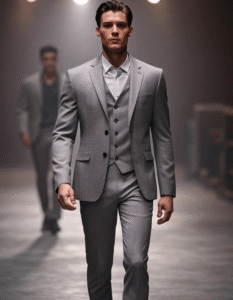
For sharp blazers, sculptural dresses, or avant-garde silhouettes, your pose must mirror the garment's geometry. Use sharper angles. A square shoulder stance. A rigid arm that echoes a seam line. The goal is to emphasize the design's structure. Your body becomes a living extension of the garment's architecture. Think of the iconic "Helmut Newton" pose—strong, graphic, and powerful.
Flowy & Ethereal Garments
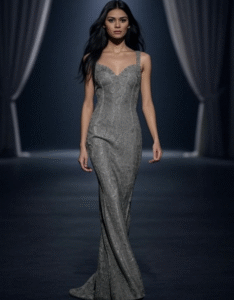
For silk gowns, chiffon dresses, or bohemian styles, your pose needs softness and movement. Think of the "S-curve": a gentle shift of weight that creates a sinuous line through the body. Let the fabric move around you; don't fight it. A slight turn of the head, a relaxed bend in the knee, a hand drifting to touch the fabric. The pose should feel fluid and organic, as if a breeze might catch you at any moment. This creates a sense of romance and ease.
Streetwear & Casual Looks
For hoodies, jeans, and t-shirts, the pose is about attitude and authenticity. It's often more relaxed but no less intentional. Think a hand in a pocket, a slight slouch that still maintains core engagement, a direct, challenging stare at the camera. The vibe is "I just threw this on and look incredible." The key is effortless cool, which requires immense practice to make look unstudied. The pose should feel like a captured moment of real life, not a staged performance.
The Industry Perspective: What Designers and Bookers Really Want
The "X-Factor" Beyond Technique
casting directors and designers consistently cite an intangible "X-factor" or "it" factor that separates good models from memorable ones. This is a combination of unique bone structure, a compelling personal story in their face, and an ability to convey a specific emotion in 0.5 seconds. A model with perfect technical poses but no discernible personality may book commercial work but will struggle in high fashion. The runway pose is where this X-factor is most visible. It’s the moment a model's individuality shines through the designer's vision. As one top booker stated in Vogue Business, "I can teach a pose. I cannot teach charisma. On the runway, charisma is everything."
The Importance of Versatility and Direction-Taking
The modern model must be a chameleon. One show might require fierce, aggressive poses; the next, delicate and fragile. The ability to take direction instantly and execute a new pose within minutes is paramount. Designers often change their minds last minute. A model who can adapt without panic is invaluable. This requires mental flexibility and supreme confidence. It’s not about having one perfect pose; it’s about having a vast library of poses and the emotional agility to access the right one on command. This professionalism is what gets you rebooked.
Your Action Plan: Building Your Runway Pose Repertoire
Creating a Personal Pose Library
Start building your digital pose library. Using your phone, take videos and photos of yourself in different outfits.
- Categorize by Vibe: Create folders for "Power," "Soft," "Edgy," "Commercial."
- Analyze: Watch the footage. Does your pose read clearly from 20 feet away? Is your face visible? Does the clothing look good?
- Refine: Pick 3-5 signature poses per category that feel authentic to you and work for multiple looks.
- Rehearse: Practice walking to each pose from different angles. Your transition from walk to pose must be seamless.
The Pre-Show Ritual
Your pre-show routine directly impacts your pose quality.
- Physical: Gentle stretching for the neck, shoulders, and back. Hydrate well in advance.
- Mental: Visualization. Close your eyes and see yourself nailing every pose. Hear the music, feel the lights, see the camera flashes. This mental rehearsal builds neural pathways for success.
- Strategic: Know your looks and their sequence. For each outfit, have 2-3 backup poses in mind in case your primary one doesn't work for the camera angle. This preparedness eliminates on-the-spot panic.
Conclusion: The Pose as Your Silent Voice
The model runway pose is so much more than a momentary freeze. It is the culmination of physical discipline, mental fortitude, and artistic interpretation. It’s the moment a garment's story is finalized by the model's silent, potent contribution. Mastering it requires understanding the core elements of posture, line, and expression, but it demands more: it asks for character, confidence, and connectivity.
Remember, every iconic runway pose you've ever seen—from Naomi Campbell's iconic hand-on-hip dominance to the ethereal stillness of a Comme des Garçons model—was born from this same blend of craft and charisma. It begins with the fundamentals: a straight spine, a focused gaze, and intentional limbs. It flourishes with practice: drills in the mirror, character work, and building your personal library. It soars with mindset: owning the space, embracing the character, and connecting with your audience.
So, the next time you witness a breathtaking model runway pose, you’ll see more than beauty. You’ll see hours of unseen practice, a deep understanding of design, and a moment of pure, commanded presence. Now, armed with this knowledge, you can either appreciate that artistry on a new level or begin to cultivate it within yourself. The runway, whether literal or metaphorical, awaits your pose. Step into your power, sculpt your space, and tell your story without saying a word.